What is Changing for Washington Employers?
Washington's overtime-exempt salary threshold is increasing for 2027 for employers of all sizes. The 2027 salary thresholds represent substantial increases over 2026 levels and may affect budgeting, compensation strategies, and exempt-employee classifications.
New 2027 Non-Exempt Salary Threshold
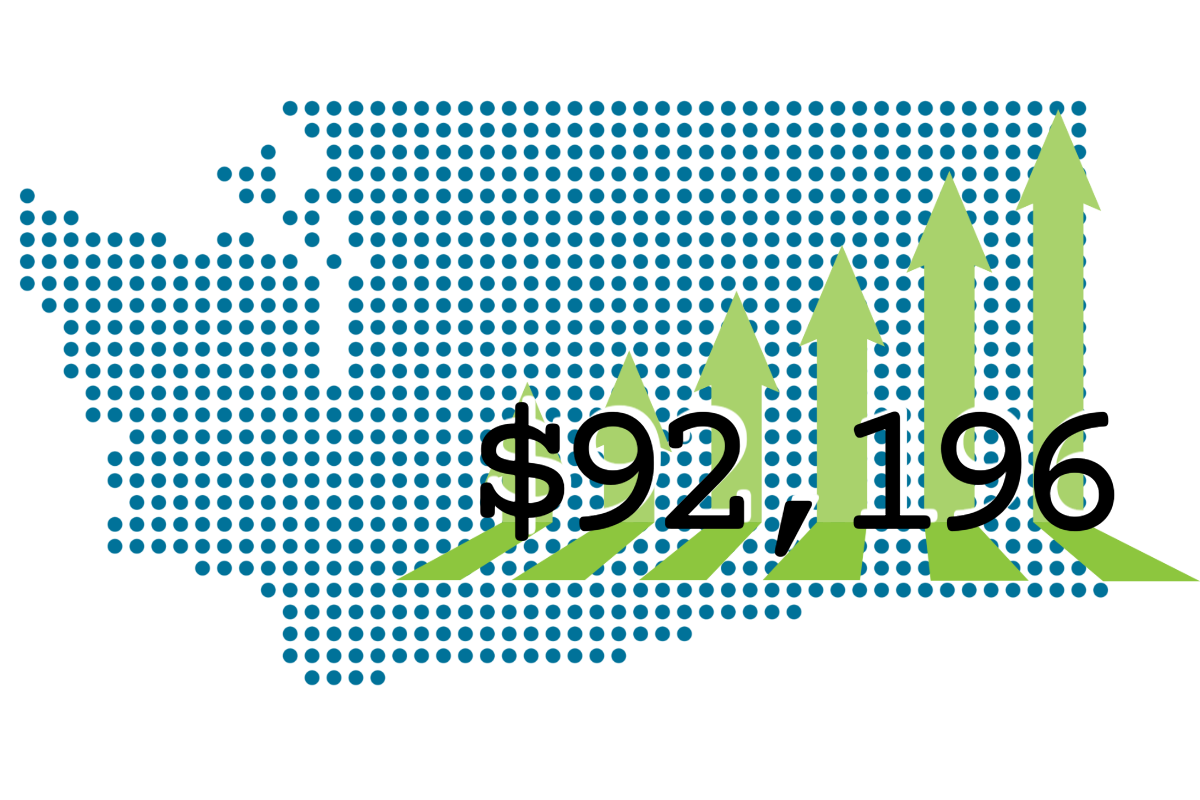
For 2027, small employers (up to 50 employees) will be required to pay 2.25x the minimum wage or $1,595.70/week ($82,976.00/year). Large employers (with 51 or more employees) will be required to pay 2.5x the minimum wage or $1,773/week or ($92,196.00/year).
For large employers, this will be the final jump before staying at the 2.5x multiplier in future years. For 2028, small employers will make one more jump up to 2.5x rate. After that, it will adjust along with the minimum wage rate only.

How Employers Communicate is Critical
For employees impacted by the change, how you decide to adjust their pay structure or rate is just as important as how you communicate it to your impacted employees.
Work with our team of HR experts to strategize the best communication solution to preserve company culture and values through this transition.

-1.png?width=400&height=400&name=Feature%20Page%20Graphics-9%20(1)-1.png)
What Employers Need to Know About WA Salary Threshold Increases
We're helping Washington employers better understand the upcoming changes to the minimum salary threshold for 2027. Read on to learn the rates for 2027 and other factors to consider as you communicate with your team.
Membership Helps PNW Employers Make HR Decisions with Confidence
Whether it's a salary threshold increase or another compliance change-- Washington Employers have relied on Archbright to keep them in the know since 1936. Membership provides access to HR and Safety resources, human expert advisors, and compliance alerts that keep you informed.
Not yet a member? Contact us to get started with Archbright Membership!

Frequently Asked Questions About Washington's 2027 Salary Threshold and Minimum Wage Increases
There isn't a list of job titles that automatically qualify for exemption. Washington's rules look at factors including how an employee is paid, whether they meet the applicable salary threshold, and whether their actual job duties satisfy an executive, administrative, professional, outside sales, or computer professional exemption.
In other words, calling someone a "manager" or "director" does not by itself make that employee exempt. Archbright members with legal hours can have our attorneys review job descriptions to determine if a role qualifies for exemption.
No. Simply reducing an employee's hours doesn't allow an employer to prorate the exempt salary threshold. The salary threshold applies even to part-time employees, so an employee must still receive the applicable minimum salary to satisfy that part of the exemption test.
Employees making less than the salary threshold will generally be eligible for overtime.
Generally, an employee who doesn't meet the salary requirement cannot qualify for one of the salary-based executive, administrative or professional exemptions. That means the employer may need to treat the employee as non-exempt and provide applicable overtime and other protections.
Not necessarily. Employers may choose to increase the employee's salary sufficiently to maintain an exemption, if the employee also meets the other exemption requirements, or reclassify the employee as non-exempt and comply with the applicable wage-and-hour requirements.
For Washington's salary threshold, bonuses, commissions and benefits can't be used to make up the difference between an employee's guaranteed salary and the required threshold. The employee's guaranteed salary needs to meet the applicable amount.
Yes, it will increase for large employers only based on any change in the minimum wage for 2028, which will be released in 2027.
Small employers will step up one more time from 2.25x the minimum wage to 2.5x for 2028 and then increase annually only with the minimum wage.
Yes. Washington has a separate computer-professional exemption. L&I notes that its general salary-threshold schedule does not apply to computer professionals paid by the hour, who are subject to higher minimum-wage multipliers.
Whether an employee qualifies for the computer-professional exemption also depends on the applicable duties requirements
The information provided on this website does not, and is not intended to, constitute legal advice; instead, all information, content, and materials available on this site are for general informational purposes only. Information on this website may not constitute the most up-to-date legal or other information. This website contains links to other third-party websites. Such links are only for the convenience of the reader, user or browser; Archbright and its members do not recommend or endorse the contents of the third-party sites. View full disclaimer.
-1.png?width=1200&height=800&name=Feature%20Page%20Graphics-2%20(1)-1.png)