1 min read
Driving Strategic Alignment Through Four EOS® Inspired Practices!
In every small to mid-sized business, strategy without alignment is like a high-performance car without fuel—it might look impressive, but it won’t...

5 min read
Liza Romero
:
Updated on August 7, 2026
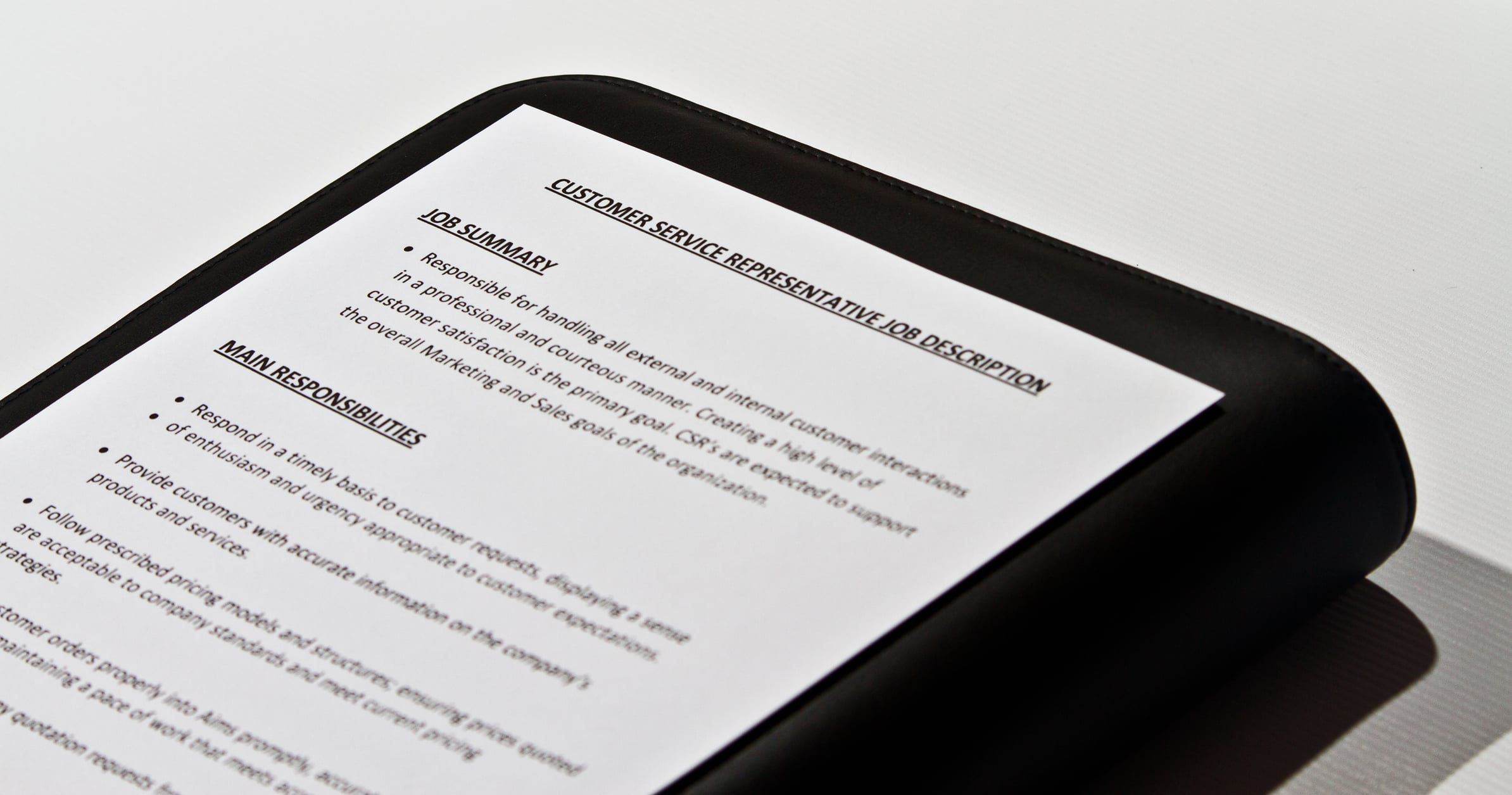
A great job description not only outlines the tasks, skills, and requirements for a given role, but it provides a level of detail that attracts the right candidates. When the time and consideration is put into crafting a well-written job description, it also serves as a benchmarking tool for this role’s manager and helps aid departmental planning.
For many applicants, reading a Job Description (JD) might be their first impression of your organization, a high-quality candidate will be looking for signals that you’re a great place to work. With AI tools playing a larger role in applications, recruiting, and matching—generic descriptions won’t cut it. If you only have seconds of a prospective candidate’s attention, make the most of it by crafting something worth considering.
Even the simplest job descriptions needs to include quite a bit of important information to show a candidate what the role will entail:
But, to be truly effective, the job description should tell a better story about what life working at your organization in this role will look like. It should also portray the qualities, skills, and expectations for the role upfront to attract applicants that will align with your values, needs, and the role specifications.
It’s a lot of information to organize, but every piece, and even additional items like preferred qualifications, schedule information, benefits offered, and a department summary can all be helpful to paint a more complete picture of life in this role.
Depending on your location, the size of your organization, and the role details you may have local, state, or federal requirements to consider when crafting your job description. Make sure to include all required elements and post according to those. If you are an Archbright member or mozzo subscriber, you can consult with the Advisor Chat to confirm you’re on the right track.
HR pros should be working with their department leads to build out the scope of the role and how they will work alongside other team members. A generic description or simply reusing what was posted the last time there was an opening can miss important ways the role has changed, or should change in the future. For example, if a key piece of work is updating a data spreadsheet but your job description focuses on creative tasks—a top candidate might be disappointed to learn their new job wasn’t advertised accurately.
Sitting down with the team to outline why the role exists, what tasks they’ll be relying on this person to complete, and the outcomes they expect it can help you shape a more effective job description that reaches the right candidates.
What makes one JD stand out in a sea of hundreds that applicants are looking over during their search? The description needs to be professional and meet all the criteria listed above, while setting expectations from day one for the job itself and selling your organization’s culture, benefits, and career opportunities. That’s a lot to fit into 1-2 pages of text!
While it can be a little bit of work upfront, the benefits to creating a great JD are huge. By requiring a well-crafted JD before posting, you ask the department lead, manager, and their team to come up with a comprehensive list of what tasks they’ll need to be onboarded to, what success looks like for the role, and create a blueprint for keeping everyone accountable.
Accurate descriptions help the right candidates come to the front. You’ll get higher quality applications with a specific and clear job description than a vague one. Asking ChatGPT for a generic description will get you generic candidates. Work a little harder to create something that outlines what your expectation of the role and what makes your organization unique, and you’ll see higher quality candidates who can picture themselves in the role submitting applications.
If you have to “jazz up” or hide critical information from your ideal candidate in order to get them to apply, they’re unlikely to take it well when they eventually find out the truth. Being upfront and honest makes a better impression of your organization and helps you streamline your hiring process to make sure there are no surprises when it comes time to offer your top candidate the position.
Being dishonest can create problems with your reputation but also open you up to legal risk. Neglecting to share the pay range or posting a range that you never intend to match is not only dishonest, but illegal in many states including Washington.
There are many tools out there to help you create a successful Job Description. Archbright offers members and mozzo subscribers a few useful templates without our platform that can help you create and refine JDs that bring in and retain great talent. mozzo also has a Job Description feature helps you write clear, compliant job descriptions that standardize your hiring, reviews, and role clarity across your organization. Once hired, JDs become a performance management tool that is stored in mozzo for easy reference.
Check out these mozzo resources to start creating an effective job description:
Job Description Questionnaire Form
In the human resources world, we know things are always changing and evolving. Whether that’s hiring and benefits trends driven by the next generation of employees or fresh legislation that changes what is required of employers. In 2026 we’re dealing with AI-generated resumes, some industries find themselves in a shortage of qualified candidates, others are swimming in applications without time to sort through them all. Candidates are considering flexible work arrangements, culture and retention, DEI policies, and how your recruiting process feels to them as they make decisions on where they want to work.
Successful HR managers will come out on top when they create clear and compliant job descriptions that are an accurate representation of what your organization is like and follow that tone through the entire hiring and performance management pipeline.
If you’ve posted a job description and the responses haven’t been what you had hoped, it might be time to reassess if the job description aligns with the type of candidate you’re hoping applies for the role. If you haven’t yet, comparing your offered salary to those of similar roles in your area can help you understand if the experience level and pay are in alignment. The Salary Survey tool in mozzo allows you to access salary information on thousands of local PNW roles.
You may need to go back to your team and ask them to revise their expectations. If you’re getting underqualified candidates, perhaps you have one of these common misalignments: salary vs experience, benefits vs location, or typos that make it difficult to discern what the details of the role will be.
For 90 years Archbright has helped organizations navigate the complex world of Human Resources. Access resources like our HR Hotline, employment lawyer support, our resource library, trainings, and more when you become a member.
1 min read
In every small to mid-sized business, strategy without alignment is like a high-performance car without fuel—it might look impressive, but it won’t...
1 min read
In the fast-moving rhythm of modern work, it’s easy for teams to rush from one task to the next without pausing to reflect. But high-performing teams...
1 min read
This article was originally shared in 2022 and has been updated as of June 11th, 2026. Juneteenth, celebrated each year on June 19, is a day to...