5 min read

Navigating Federal and State Heat Illness Prevention Requirements in 2026

Navigating Federal and State Heat Illness Prevention Requirements in 2026

Global temperatures continue to trend upward, and so does regulatory attention on workplace heat hazards. After record-breaking heat in recent years, extreme heat is no longer a seasonal issue—it's a year-round workplace risk.

For employers, 2026 marks a pivotal moment. In April, the federal Occupational Safety and Health Administration (OSHA) updated its National Emphasis Program (NEP), directing the agency to prioritize inspections and outreach in 55 high-risk industries using recent injury, illness, and enforcement data. Meanwhile, states including California, Oregon, and Washington continue to advance their own enforceable rules. Understanding how these layers fit together is critical to maintaining compliance and protecting your workforce.

Key 2026 Updates and Takeaways for Employers: 

  • OSHA has proposed a new rule surrounding heat protection in the workplace on a federal level

  • States like Washington, Oregon, and California have strengthened their own laws around heat protections for workers.

  • Archbright recommends employers put together safety plans before legislation requires it and offers resources to support our members with the process. 

The Growing Risk of Workplace Heat Exposure

Heat exposure remains a leading cause of weather-related workplace fatalities in the United States. The most recent data show:

Untitled - July 06, 2026 at 09.33.11-2 (1)

  • 48 workers died from environmental heat exposure in 2024.
  • Approximately 7,100 nonfatal heat-related cases resulted in days away from work, job restriction, or transfer in 2023–2024.

These numbers likely understate the true impact. Heat contributes to other incidents, such as falls, fatigue-related errors, and equipment accidents, that may not be classified as heat-related.

Beyond human impact, employers face productivity losses, increased workers' compensation costs, and operational disruptions. As heat events become more frequent and intense, these risks will continue to grow.

What Is Heat Stress?

Heat stress occurs when the body cannot effectively cool itself, causing internal temperature and heart rate to rise. All workers—indoors or outdoors—may be at risk.

Common heat-related illnesses include:

  • Heat rash: Skin irritation from excessive sweating.
  • Heat cramps: Muscle pain due to electrolyte imbalance.
  • Heat exhaustion: Symptoms include dizziness, nausea, fatigue, and heavy sweating; can escalate quickly.
  • Heatstroke: A medical emergency where the body loses the ability to regulate temperature and can lead to permanent injury or death.

Federal OSHA: Progress, Uncertainty, and Enforcement Trends

Proposed Federal Heat Standard

OSHA took a major step forward by publishing a proposed rule, Heat Injury and Illness Prevention in Outdoor and Indoor Work Settings, in August 2024.

Untitled - July 06, 2026 at 09.33.11-3

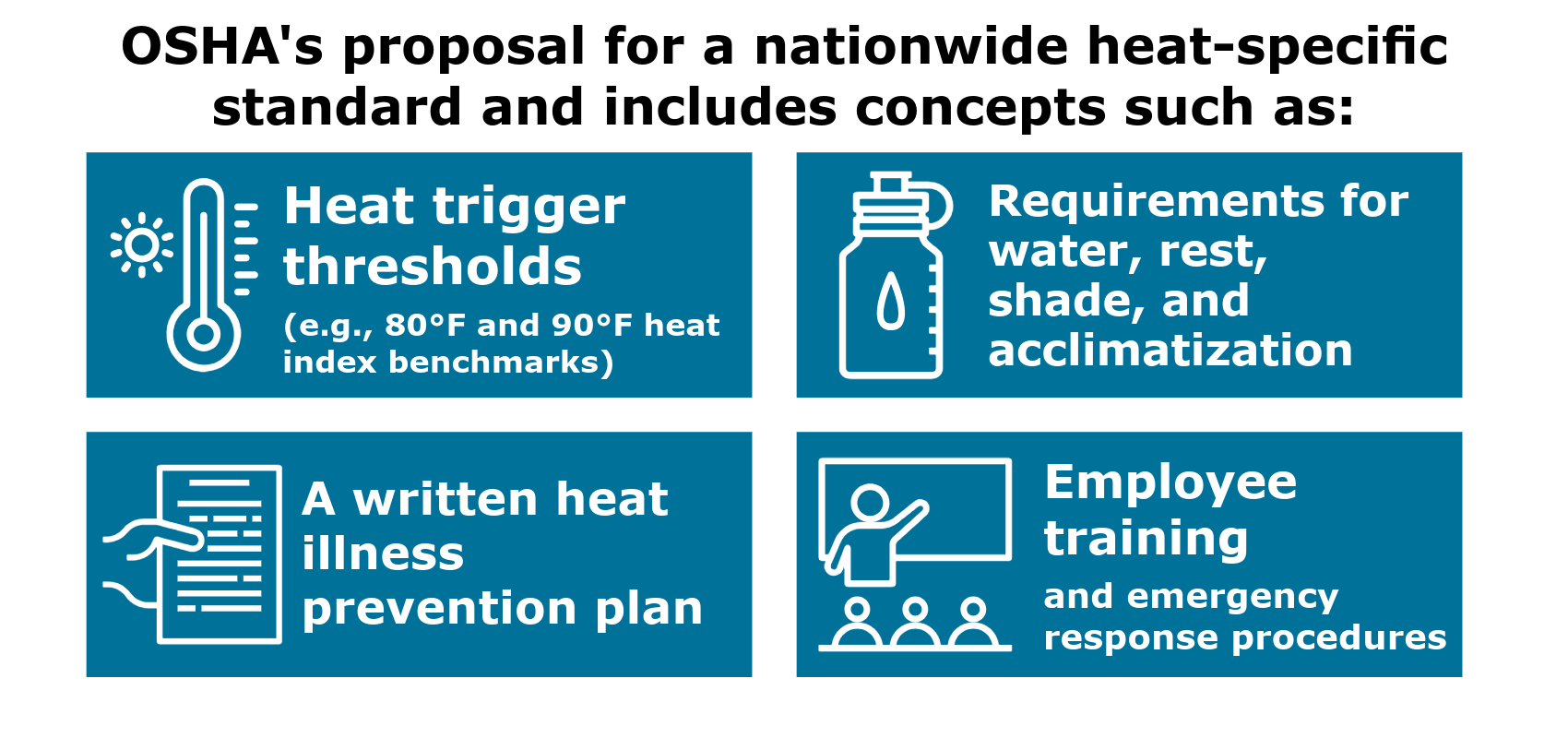
The proposal would establish the first nationwide heat-specific standard and includes concepts such as:

  • Heat trigger thresholds (e.g., 80°F and 90°F heat index benchmarks)
  • Requirements for water, rest, shade, and acclimatization
  • A written heat illness prevention plan
  • Employee training and emergency response procedures

However, the rule is not yet final, and OSHA has not provided a timeline for completion. Public hearings concluded in July 2025, and OSHA continues reviewing stakeholder input.

OSHA's National Emphasis Program (NEP): What Employers Need to Know

Although OSHA has not yet finalized a specific federal heat illness prevention standard, employers are still obligated to protect workers from heat-related hazards under the Occupational Safety and Health Act's General Duty Clause. This clause requires employers to provide a workplace free from recognized hazards likely to cause death or serious physical harm, and OSHA has long recognized heat illness as a workplace hazard.

OSHA's updated NEP significantly strengthens its approach and supports enforcement efforts. Under the NEP, compliance officers may conduct proactive inspections during heat events, including when the National Weather Service issues a heat advisory or warning or when the heat index reaches approximately 80°F or higher. Inspectors are also directed to expand existing inspections if heat hazards are observed and conduct random inspections in high-risk industries during periods of elevated heat. The updated NEP is effective immediately and is expected to remain in place for five years.

The updated program provides OSHA compliance officers with clearer guidance on evaluating employer heat-illness prevention programs and determining when citations may be appropriate. As a result, employers should ensure they have effective measures in place, such as access to water, rest, shade or cooling areas, acclimatization procedures, employee training, and emergency response protocols. While the NEP is not itself a standard, it demonstrates that OSHA is actively enforcing the General Duty Clause regarding heat-related hazards, making heat illness prevention a critical compliance priority for employers today.

State Programs: The Leading Compliance Trend in 2026

While federal rulemaking continues, state OSHA plans are leading the way. At least six states, including California, Oregon, and Washington, have enforceable heat standards in place.

For many employers, state law—not federal OSHA—is the primary source of compliance obligations today.

California: Expanding Indoor and Outdoor Protections

California remains the most comprehensive jurisdiction for heat illness prevention.

All employers with outdoor workers must have:

  • A written Heat Illness Prevention Plan
  • Access to water and shaded areas for rest breaks
  • High-heat procedures and acclimatization protocols
  • Training in English and a language that workers understand

Notably, California's indoor heat rule took effect in 2024 and applies to workplaces when temperatures reach 82°F. The requirements are similar to those for outdoor areas, but instead of shaded areas, cool-down areas must be provided.

Untitled - July 06, 2026 at 09.33.11-4

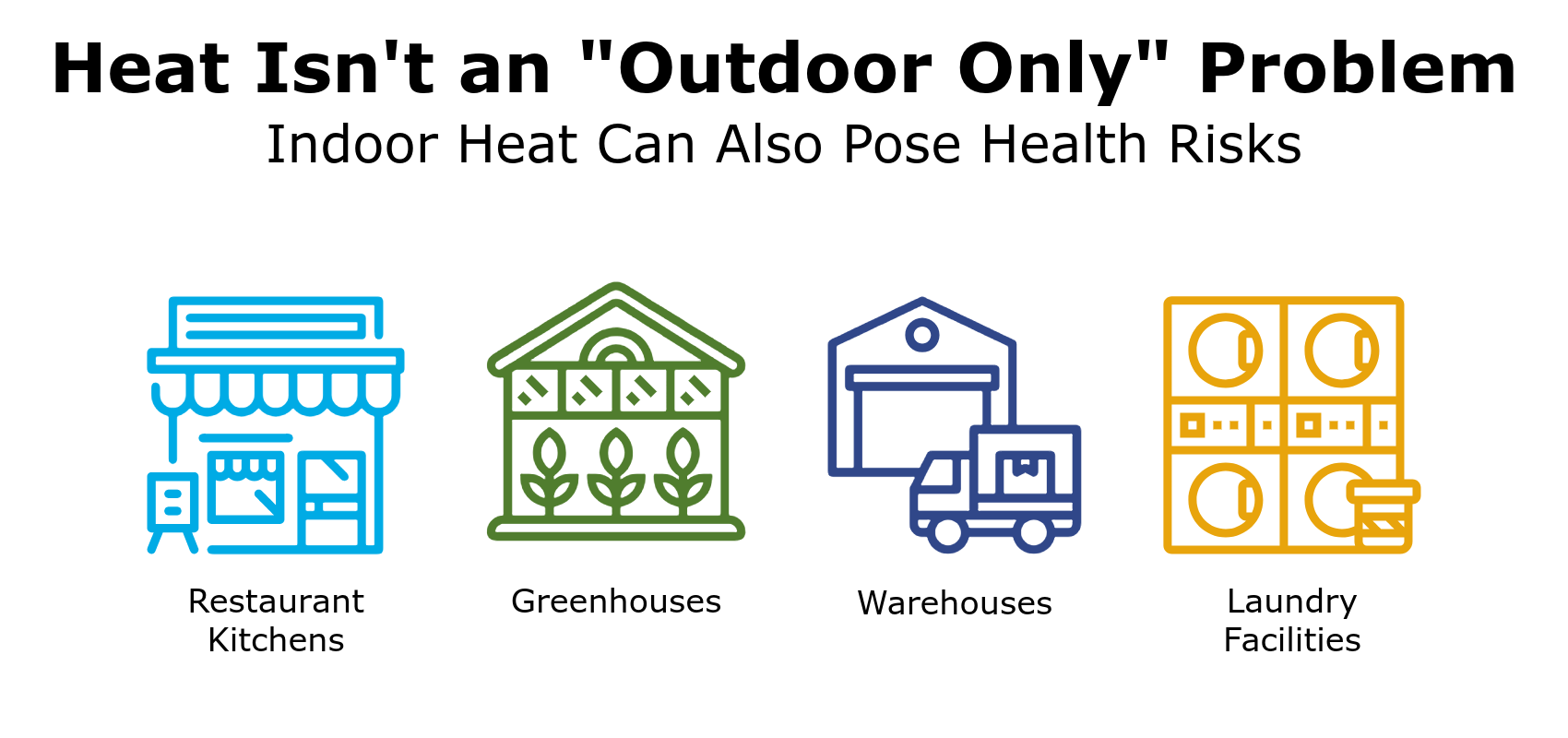
This expansion reflects a broader trend—recognizing that indoor environments, such as warehouses and restaurant kitchens, pose significant heat risks.

Oregon: Detailed and Prescriptive Requirements

Oregon OSHA requires employers to protect workers when the heat index reaches 80°F or higher, regardless of whether workers are indoors or out, with additional controls at higher temperatures.

Employers must implement:

  • A written heat illness prevention plan
  • Cool drinking water, rest, and shade
  • Acclimatization procedures
  • Emergency response and employee training

 Oregon's standard is notable for its specificity, including detailed expectations around hydration and environmental conditions. Employers with agricultural workers have additional requirements.  

Washington: Lower Thresholds and Broad Coverage

Washington's Department of Labor and Industries (L&I) has established several outdoor heat rules, including rules for employers covered by general industry, agriculture, firefighter, and wildland firefighter requirements.

General industry outdoor heat exposure rules apply at:

  • 80°F for most employees
  • 52°F when workers wear non-breathable clothing or personal protective equipment (PPE)

Requirements include:

  • A written Outdoor Heat Exposure Plan
  • Access to drinking water and shade
  • Cool-down breaks
  • Acclimatization
  • Employee training
  • Emergency procedures

Washington continues to actively enforce these requirements year-round, making documentation and training critical.

What's Next for Heat Safety Regulation?

Looking ahead, several trends are shaping the regulatory landscape:

1. Continued Federal Uncertainty—While OSHA's proposed federal heat standard remains under review, the agency continues to enforce heat-related hazards under the General Duty Clause and through increased inspections in high-risk industries, such as construction, manufacturing, and warehousing, under the NEP.

2. State-Level Momentum—More states are expected to adopt or expand heat rules, particularly for indoor workplaces and industries like warehousing and manufacturing.

3. Increasing Enforcement Expectations—Even without a finalized federal rule, employers are expected to implement structured, documented heat prevention programs aligned with OSHA guidance and leading state standards.

4. Standardization Around Key Elements—Across jurisdictions, certain requirements are becoming consistent:

  • Written heat illness prevention plans
  • Defined temperature or heat index triggers
  • Water, rest, and shade (or cooling)
  • Acclimatization procedures
  • Training and emergency response protocols

Preparing Your Workplace for Heat Safety

Whether or not your state has a formal rule, employers should take proactive steps now:

  • Develop and maintain a written heat illness prevention plan
  • Conduct job hazard analyses for heat exposure risks
  • Train employees annually on heat illness symptoms, prevention techniques, and response procedures
  • Establish clear emergency protocols
  • Monitor temperatures and adjust work practices during heat events
  • Review incident data to identify trends and improve controls

Employers who act now will be better positioned for both compliance and workforce protection, regardless of how federal rulemaking evolves.

Ready to Strengthen Your Heat Safety Program?

Prioritizing heat prevention is both a compliance obligation and a critical step in protecting your workforce. Head to the mozzo™ Resource Library and find templates, quick start guides, and other helpful information or use Advisor Chat to reach our safety experts to answer any questions you may have about heat safety.

Related mozzo™ Resources:

Not yet an Archbright or mozzo member? We're offering a FREE two-week trial of our mozzo HR resource hub that allows you to try out features like the Resource Library, Advisor Chat, Salary Survey, and Video Training Library.


Navigating Federal and State-Required Heat Prevention Plans

1 min read

Navigating Federal and State-Required Heat Prevention Plans

NASA's Goddard Institute for Space Studies (GISS) scientists reported that July 2023 was the hottest month on record globally. Unfortunately, experts...

Read More
OSHA 300 Recordkeeping: Common Questions and 2024 Changes to Electronic Submissions

1 min read

OSHA 300 Recordkeeping: Common Questions and 2024 Changes to Electronic Submissions

The Occupational Safety and Health Administration (OSHA) requires many organizations with 11 or more employees to follow recordkeeping requirements,...

Read More
OSHA 300: Common Questions, COVID-19, and Potential Changes

1 min read

OSHA 300: Common Questions, COVID-19, and Potential Changes

The Occupational Safety and Health Administration (OSHA) requires many employers with 11 or more employees to follow recordkeeping requirements,...

Read More